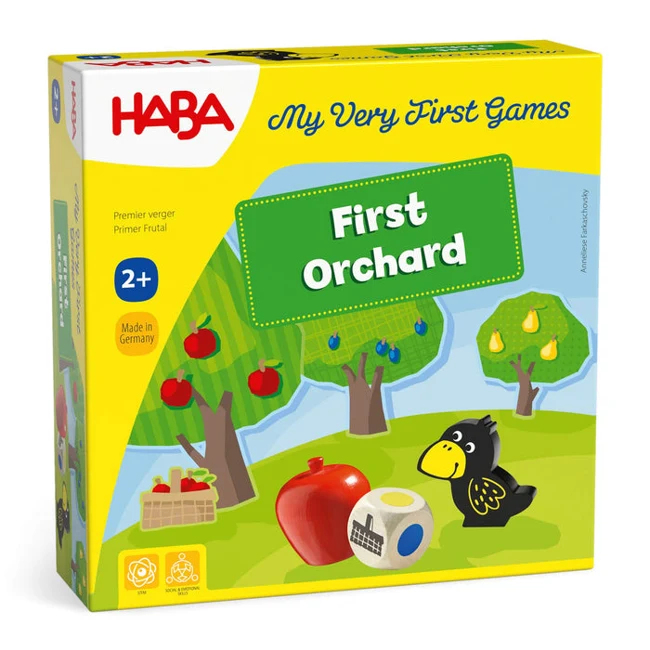
For a little host, try a tea party. For movement-loving families, explore Monkey Around. For a first game with a shared goal, gather around First Orchard.
Everyone works toward the same goal, creating a gentle setting for taking turns and following a simple rule. Matching the die to the fruit gives colors and sorting a purpose beyond being quizzed.
A little way to play
Begin by putting fruit in the basket together. When your child is interested, add the die and take turns gathering fruit before the raven arrives. Keep the mood playful if the raven wins.
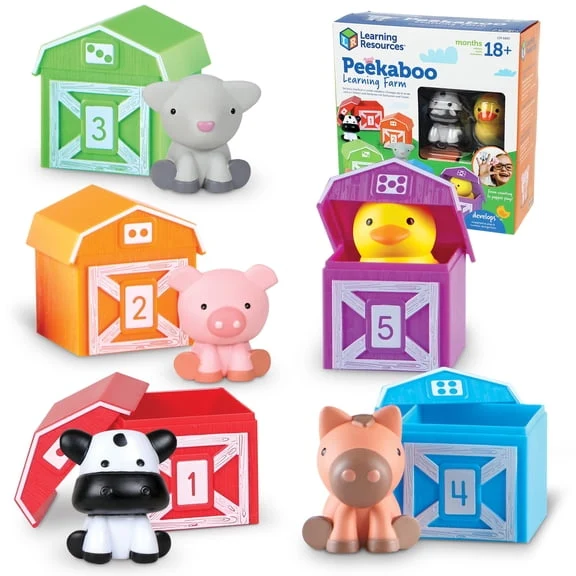
Opening a barn creates a reason to wonder, look, and respond. The animal figures invite pretend conversations, while separating and rejoining the barn pieces offers practice using both hands.
A little way to play
Hide one animal in a barn and make its sound. Let your child open the barn and greet it. Take turns choosing who will hide next.
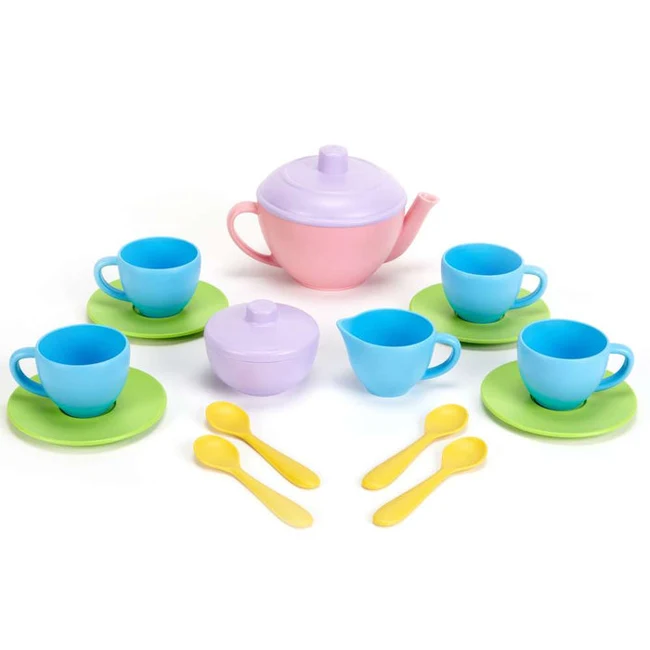
Pretend serving creates reasons to ask, answer, offer, and take turns. A familiar everyday routine becomes a little story your child can direct, with opportunities to imagine what another person wants.
A little way to play
Invite two stuffed animals to tea. Let your child choose a cup for each, pretend to pour, and ask who needs a refill. Join their story without correcting how tea parties should work.
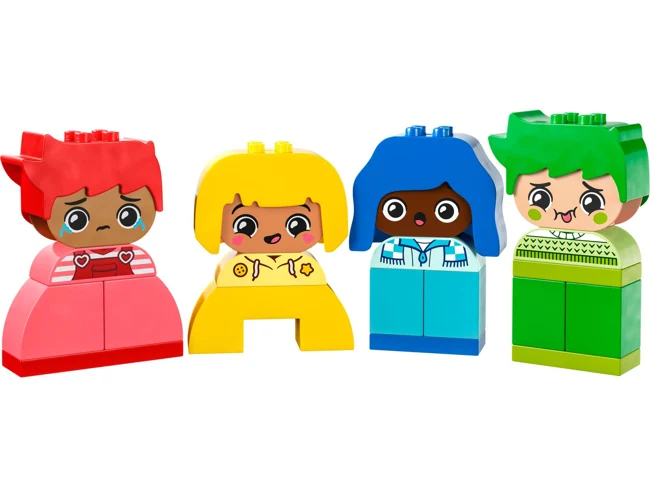
Building expressive characters combines hand coordination with pretend storytelling. The faces can open a conversation about feelings without asking a child to explain their own difficult moment on demand.
A little way to play
Build a character and tell a tiny story: their tower fell and they feel sad. Ask what the character might like next, or let your child simply choose another face.
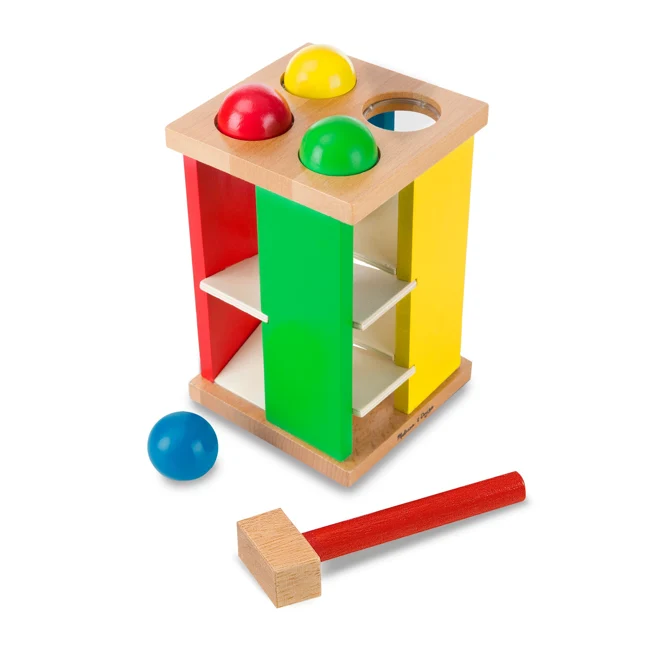
Following a ball as it rolls down the ramps turns cause and effect into a little experiment. Aiming at a ball with the hammer also gives a child practice coordinating eyes and hands.
A little way to play
Begin with one ball. Let your child watch its whole journey, then return it to the top together. Try another ball and notice what stays the same.
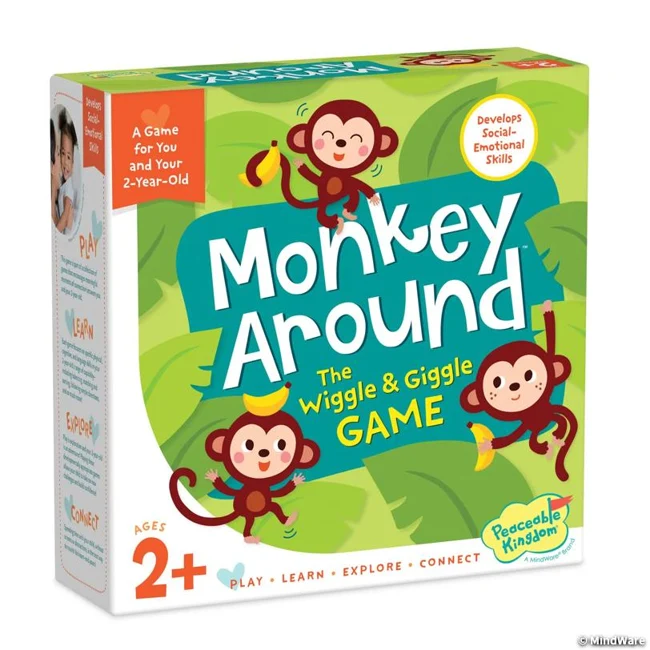
Simple action cards create an invitation to listen, imitate, and move together. Shared turns give a first experience of a game structure while leaving room for different abilities and ways to participate.
A little way to play
Choose one comfortable movement and do it together. Let your child watch first, try a smaller version, or suggest a different action. There is no need to finish all the cards.
 2 years+