For hands that want to explore, start with the cups or bead maze. For a gift you can enjoy together straight away, choose a book. For a little sound experiment, try the musical bench.
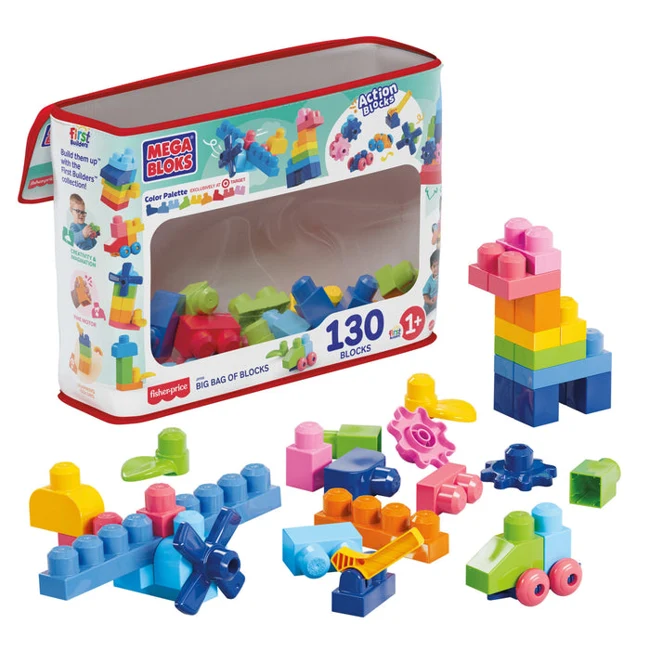
Joining, separating, and balancing big blocks gives little hands practice coordinating movements. Figuring out what fits and what falls makes space for experimenting, spatial thinking, and trying again.
A little way to play
Start with a two-block tower. Take turns adding one block, then make a little garage for a toy vehicle. Use words like on, under, taller, and beside as you build.
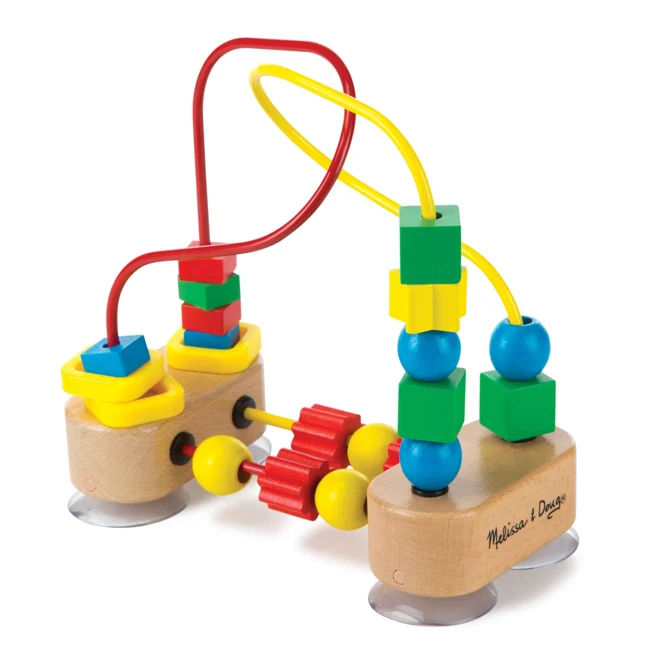
Sliding a bead along a winding track gives little fingers a clear task to explore. Moving around curves invites hand-eye coordination and a first experience of planning a path.
A little way to play
Move one bead slowly around a bend, then pause for your child to try. Talk about up, down, and around while following their chosen route.
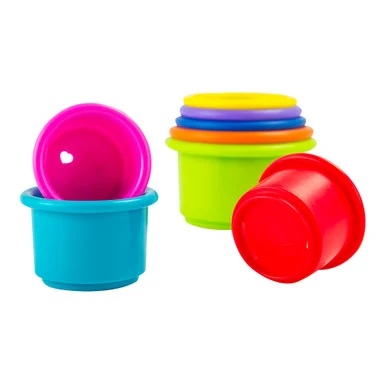
Stacking and nesting make size relationships something a toddler can explore with their hands. Taking a tower apart and trying again offers a simple cause-and-effect experiment.
A little way to play
Offer three cups and see which fit inside each other. Stack them together and let your child choose when to knock the tower down.
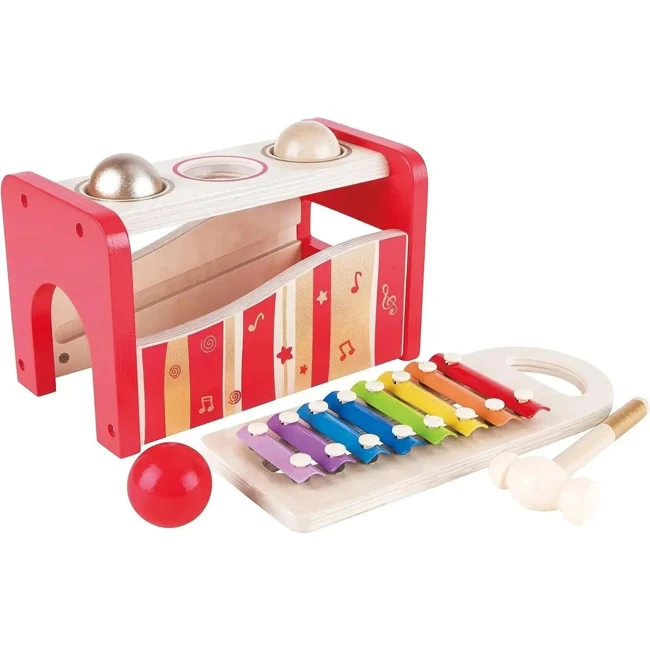
A tap or falling ball produces a sound, making the relationship between an action and its result easy to explore. Trying different keys invites listening, imitation, and playful musical choices.
A little way to play
Demonstrate a gentle tap and pause. Let your child choose a key or follow a ball as it falls. Echo a short rhythm they make, rather than asking them to play a tune.
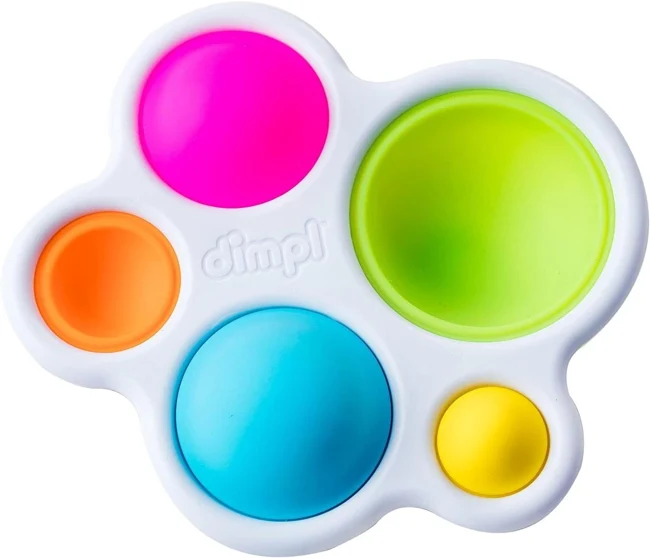
Pressing a silicone bubble through the frame links a finger movement with an immediate result. The different bubble sizes offer a simple tactile experience that a child can repeat at their own pace.
A little way to play
Press one bubble slowly and let your child explore the other side. Try a different bubble together without requiring a sequence or color answer.
Looking behind a flap creates a natural reason to predict, point, and share a reaction. The familiar household hiding places invite conversation about position words such as under and behind.
A little way to play
Ask where you might look, then let your child lift the flap with help. React to the animal together and follow the pages your child finds interesting.
 12 months+